
Turns out reading is good
I just figured out that all Big Tree Tech main boards are open source. Turns out reading and trying to find answers on internet is kinda nice.

I just figured out that all Big Tree Tech main boards are open source. Turns out reading and trying to find answers on internet is kinda nice.

Turns out making a 3D printer main board is not that easy. I must say I went into it with too much "not thinking" and too much enthusiasm. However, I got some knowledge, and a new idea that can be realized faster than the whole main board.

There it is in KiCad. I can't understand why it has so much VDD pins. I guess i can just copy the capacitors on those from someone else. 12 * 100nF caps. Guess one for each damn pin. Just will take too much space on the board. What follows

In order for Marlin firmware to work properly on my imaginary main board I'm building. Turns out there is a file in a Marlin GitHub repository that has pre set pins for certain popular main boards that use H7 as their brain. One of those is a BTT

Well the task of making a main board is incredibly complicated, that's why it needs to be as simplified as much as possible. The schematic of Ender 3 motherboard is a good reference I feel. Because they wanted to cut costs everywhere they could. That includes a main

LMR51450SDRRR - Voltage regulator [1] TPS2116DRLR - Power source selector [2] TXS0108ERGYR - Logic voltage translator [3] LM61495RPHR - Voltage regulator [4] LP5912-3.3DRVR - Voltage regulator [5] Those are all some kind of voltage regulators I found in SmartPrintCoreH7x [6] open source main board. And those are not all. It seems to me

Found this nice short manual about stepper motors [1] by Oriental motor [2], which is a US based company that manufactures stepper motors. Dude, I'm not cut out of this. I'm able to understand it a little, but then it starts to build hard concepts on

Trying to connect a distance sensor that works over I2C with Arduino and god damn Simulink is confusing. There is no library for sensor that I'm trying to connect (vl6180 sensor), and reading data over I2C is not the way to go. Probably need to buy the right

It's my dream one day to start manufacturing and selling electronics. However, it's not an easy road ahead. Seems like EU laws are a big obstacle. I'm not saying those laws are bad. They probably protect everyone, however it is hard to start selling
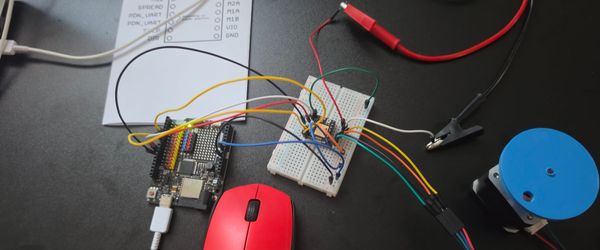
I got this bright idea to try making stepper motor go faster. So I can make my 3D printer go faster. However, the experiment that I did shows that it is not a good idea. This is not a professional experiment in any way, it's more for my

Well, 3D printers got my interest, and as an electrical engineer, only thing that I have some pre knowledge for is the electronics part. And that's pretty much only motherboard and power supply, and maybe motors. But I feel like 3D printers are more of a mechanical engineering
Besides me, I got an old Ender 3 V2 that still works fine. For control of its z position it has a lead screw. For other two axis it uses belts as everyone else. But why can't all axis have lead screws? As I'm looking at
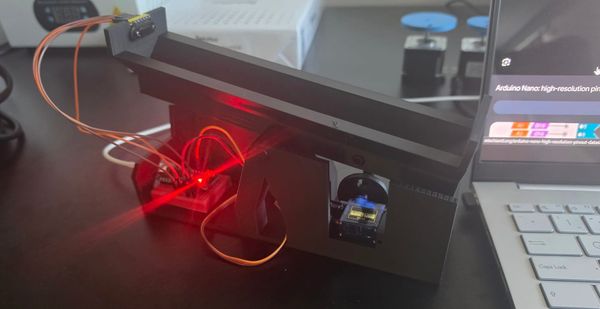
Just made this bad boy. It is a ball and beam balancing device that serves as a learning tool, or even an example tool for closed loop control system. Will release cad models on github, so others can print it for themselves.

Goal of the day is exploring the control systems and its main mechanics, but do it all with words. Words? Usually when trying to learn this particular subject there are a lot of equations thrown at me. Each of those is important, and maybe it's not possible to

I'm on a search to find the fastest way someone can write stuff down. Awhile ago I was 100% certain the device I was looking for is something like Kindle Scribe, or Remarkable. So I bought one of those. It's from a different manufacturer though, and

This idea was in my head for quite a while. It actually started from an idea to make a product that i can sell, or at least try to sell. The market does not need any more clocks, however i didn't see much of this kind of clocks.

Lately my YouTube algorithm decide i need to watch a lot of videos about Linus Torvalds, and how Linux was made. That was the start of this blog post. So thank you YouTube. To me, the open source software is so badass when compared to closed source. There is something
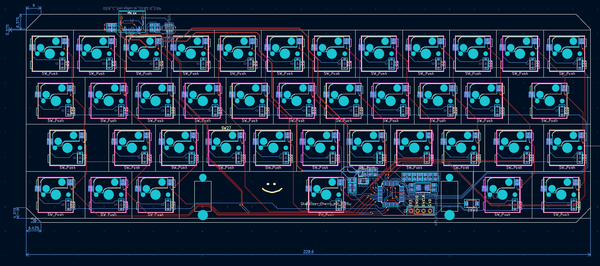
Smallest keyboard layout possible is called 40% keyboard. It has about 40 switches, and those are all letters and couple of necessary keys for writing, like space, enter, backspace... In order to make something like that keyboard, a microcontroller with HID capabilities is required. In my case i used STM32F103
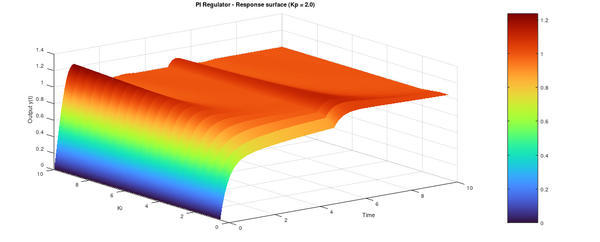
Goal of the day is understanding the PI regulator. Before anything there is a great resource that explains PI and other regulators in detail and its: controlsystemsacademy.com t = 0:0.01:10; % Time vector setpoint = 1.0; % Desired value Kp = 2.0; % Proportional gain(how strong the P part
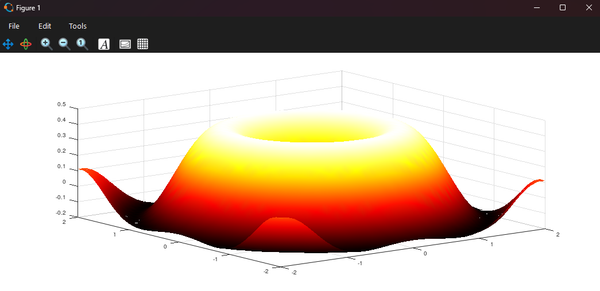
I remember in college, there was one math professor that did the problem examples on the whiteboard, but when he got stuck he will real quick go to his laptop, open GNU Octave and type in a short formula that will solve him the whole problem. And then he would
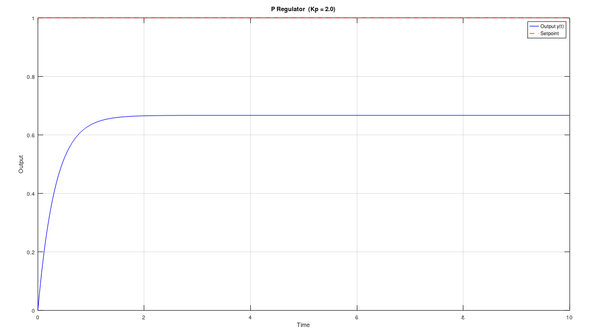
Even though system control was main subject for me for a while in college, i did not grasp on that subject too well. The main outline is clear to me. We got closed loop and in place of the controller it's possible to put all kinds of controllers.
Project
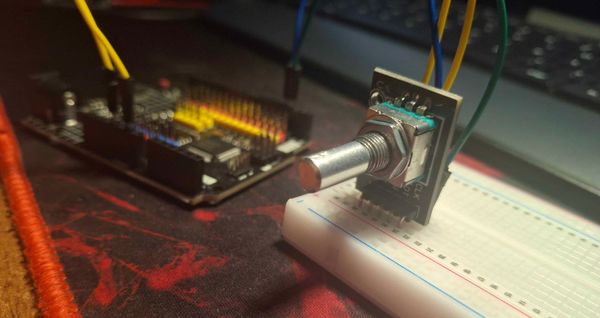
I found this little rotary encoder. At first i didn't know what that is, it looks like a potentiometer, but pins are weird. The pins are: GND, VCC, MS, DT, CLK It turns out it's a mechanical rotary encoder. What's rotary encoder used for?

Project
Considering how this is my second post on the topic, and the first one didn't go well. I will try to redeem myself by performing a small exploration into how much it costs to make a mechanical keyboard from zero. Now there are some limitations to this. Of